
The best windows for Arizona heat combine low-solar-gain low-E glass, a low Solar Heat Gain Coefficient (SHGC), a low U-factor, double-pane insulated glass, and an insulated or thermally broken frame, all installed by a professional.
No single material or brand automatically wins. The complete window system’s performance ratings are what matter. ENERGY STAR recommends selecting windows by climate zone, while the NFRC provides independently certified ratings for U-factor, SHGC, visible transmittance, and air leakage so homeowners can compare products on equal footing.
Why Arizona Heat Is So Hard on Windows
Arizona windows face intense direct sunlight, prolonged triple-digit summers, indoor-to-outdoor temperature differences, and strong afternoon sun hitting west-facing glass. Heat enters through the glass itself, as well as through frames, seals, and gaps left by poor installation.
The result for a home with underperforming windows is hot spots, glare, fading furniture, and an air conditioner that never quite catches up. ENERGY STAR recommends low-SHGC windows on south-, east-, and west-facing walls in warm climates, with particular attention to west-facing openings.
What Window Frame Material Is Best for Arizona?
Frame construction, reinforcement, and installation quality affect real-world performance as much as the glass package. Here is how the main options compare for Arizona conditions:
1. Fiberglass
Dimensionally stable and resistant to expansion and contraction during extreme temperature swings. Fiberglass offers strong insulation, low maintenance, and structural strength for larger openings, though it typically comes with a higher upfront cost.
2. High-Quality Vinyl
Provides strong thermal insulation, low maintenance, and a range of price points. Vinyl windows with foam-filled cavities and internal reinforcement generally perform better than builder-grade products. In Arizona, choosing vinyl engineered for prolonged exposure to heat is especially important.
3. Composite
Combines materials such as fiberglass and wood fiber to provide good insulation, dimensional stability, and low maintenance. Composite frames also offer more aesthetic options but generally cost more than standard vinyl frames.
4. Thermally Broken Aluminum
Uses a non-conductive thermal barrier between the interior and exterior sections of the frame to reduce heat transfer. Standard aluminum conducts too much heat for Arizona conditions, so a properly engineered thermal break is essential.
5. Wood and Clad-Wood
Provide natural insulation and a traditional appearance that works well for design-focused projects. Clad-wood options reduce exterior maintenance, although Arizona’s intense sun and dry climate can still require more upkeep than vinyl, fiberglass, or composite frames.
The Best Window Features for Arizona Homes
A Low Solar Heat Gain Coefficient
SHGC measures how much solar heat passes through a complete window. The lower the number, the less solar heat enters the home. The Department of Energy describes products with an SHGC below 0.40 as low-gain products intended for hot climate zones. The right target depends on window orientation, shading, and the applicable ENERGY STAR climate zone requirements. Verify ratings from the NFRC label rather than relying on manufacturer marketing language.
A Low U-Factor
U-factor measures how readily heat moves through the entire window system, including the frame, spacers, and edge seals, not just the glass center. A lower U-factor means better resistance to heat transfer, which helps keep outdoor heat from warming an air-conditioned interior throughout Arizona’s long cooling season.
Low-E Glass
Low-emissivity (low-E) coatings are thin metallic layers that manage how heat and light move through the glass. For Arizona, low-solar-gain and spectrally selective low-E coatings are the most relevant options. They reduce solar heat transfer while preserving useful natural light, so homeowners do not need to choose between comfort and a bright interior. The Department of Energy specifically recommends spectrally selective coatings in warm climates because they control summer heat gain without significantly changing visible light.
Double-Pane Insulated Glass
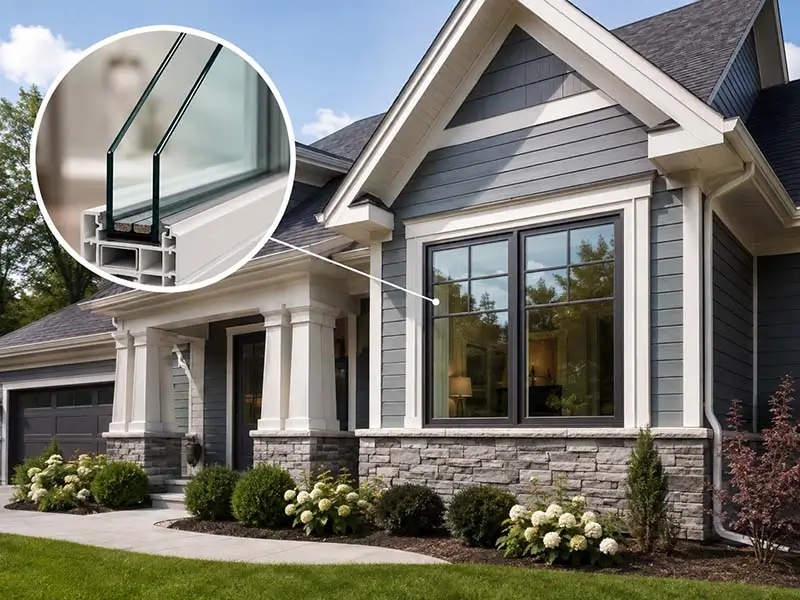
Double-pane windows use two glass layers separated by an insulating space, often filled with argon gas to reduce conductive heat transfer. For most Arizona replacement projects, a well-specified double-pane unit with a quality low-E coating and a low SHGC is a practical and effective starting point. Improved comfort near the glass and meaningful noise reduction are additional benefits worth noting for homes near busy roads or flight paths.
Low Air-Leakage Ratings
Even the best-rated glass cannot overcome gaps in the window assembly. Air leakage enters through operable sashes, worn weatherstripping, and poorly insulated rough openings. Lower air-leakage ratings indicate a tighter unit. The Department of Energy emphasizes that proper installation is also essential for controlling infiltration around the frame, separate from the window’s own rating.
How to Check the NFRC Label
The NFRC label provides standardized, independently verified ratings for every certified product. For Arizona homes, pay closest attention to SHGC and U-factor. Visible transmittance (VT) indicates how much natural light enters, while air leakage (AL) measures how tight the assembly is. Always compare whole-window ratings rather than center-of-glass claims, which overstate real-world performance by ignoring the edges and frames.
Double-Pane vs. Triple-Pane Windows in Arizona
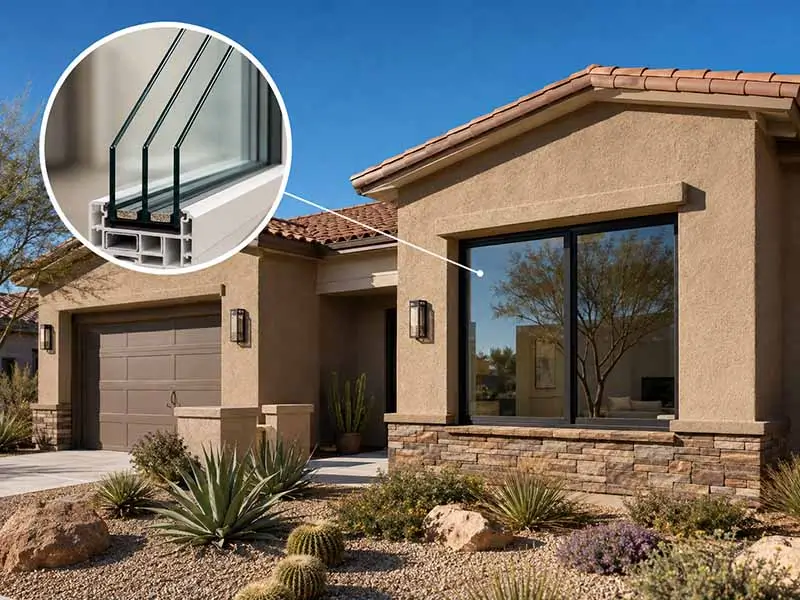
Triple-pane windows add a third glass layer and a second insulating space, improving thermal resistance and sound control. In cold climates, the additional insulation can meaningfully shorten payback periods.
In Arizona’s cooling-dominated climate, double-pane windows with a strong low-E package and a low SHGC are commonly sufficient for most homes. Triple-pane units can provide added comfort and noise benefits, but the payback period may be longer when cooling, not heating, drives energy costs. Whole-window SHGC, U-factor, air leakage, and installation quality typically matter more than pane count alone.
Pay Extra Attention to West-Facing Windows
West-facing windows receive direct afternoon sun during the hottest part of the day and usually require the most solar-control attention in any Arizona home. Prioritize the lowest practical SHGC, high-performance low-E coatings, and exterior shading options such as solar screens, awnings, or deep overhangs to reduce solar load before it reaches the glass.
South- and east-facing openings also benefit from low-SHGC glass and shading, particularly where direct sun exposure is significant. North-facing windows receive little direct sun throughout the year, though a low U-factor and quality installation still contribute to overall comfort and efficiency.
What Windows Should Arizona Homeowners Avoid?
Certain choices create problems that are difficult and expensive to correct after installation:
- Single-pane windows with no insulating space or coating
- Clear glass without a solar-control low-E coating
- Standard aluminum frames without engineered thermal breaks
- Windows chosen entirely by appearance or price
- Excessively dark tint that sacrifices daylight without improving efficiency
- Products without verified NFRC ratings from independent testing
- Bargain windows not designed or tested for prolonged heat exposure
- Replacing only the glass without addressing damaged frames, seals, or rough openings
- Improper installation that leaves gaps around the frame regardless of the product’s rating
Darker glass is not automatically more efficient. Spectrally selective low-E coatings can control solar heat while preserving considerably more natural light than heavy tinting.
Are Energy-Efficient Windows Worth It in Arizona?
The value of energy-efficient windows extends well beyond any single utility bill estimate. What Arizona homeowners consistently gain:
- More consistent indoor temperatures, with fewer hot spots near glass
- Reduced demand on the cooling system during prolonged heat events
- UV protection that slows fading of flooring, furnishings, and artwork
- Reduced glare during peak sun hours
- Meaningful noise reduction near traffic or flight paths
ENERGY STAR reports that certified windows can reduce household heating and cooling costs compared with non-certified products. Actual results depend on the existing windows, home design, climate, and installation quality.
Installation Matters as Much as the Window
NFRC ratings describe how a window performs under correct installation conditions. A highly rated product can still leak air, admit heat, and allow water intrusion if installation is poor. ENERGY STAR specifically warns that high-performance windows can remain drafty when installation practices are inadequate.
Quality installation for Arizona replacement windows includes accurate rough opening measurements, proper flashing at the sill and head, insulation around the frame to eliminate thermal bridging, full air and water sealing at every transition, correct frame alignment and fastening, and a final check of hardware, operation, and weatherstripping. A reputable installer follows manufacturer requirements precisely, because deviations can affect both performance and warranty coverage.
Arizona Window-Buying Checklist
Bring these questions to any replacement window consultation:
- Is the window certified for the correct ENERGY STAR climate zone?
- What is the whole-window SHGC (not center-of-glass)?
- What is the whole-window U-factor?
- Does the glass carry a low-solar-gain low-E coating?
- Is the unit double- or triple-pane, and what gas fill is used?
- Is the frame insulated, foam-filled, or thermally broken?
- What is the air-leakage rating?
- How are west-facing windows being addressed?
- What installation method will be used, and does it follow manufacturer requirements?
- What do the product and labor warranties cover, and for how long?
- Will NFRC-certified labels be provided for each installed unit?
Frequently Asked Questions
Are Vinyl Windows Good for Arizona Homes?
Quality and engineering matter enormously. High-quality vinyl windows with foam-filled cavities, internal reinforcement, and proper low-E glass packages can perform well in Arizona’s climate. Inexpensive vinyl products built without those features may not offer the same thermal stability or long-term durability under prolonged extreme heat.
Are Fiberglass Windows Better Than Vinyl in Arizona?
Fiberglass generally offers greater dimensional stability and structural strength, which matters for large openings and extreme temperature ranges. Quality vinyl with proper reinforcement can also perform well at a lower initial cost. Comparing specific products by their NFRC ratings is more useful than comparing material categories.
What SHGC Should Arizona Windows Have?
Arizona homeowners should prioritize a low SHGC appropriate for their ENERGY STAR climate zone, generally below 0.40 for warm climates. The specific target depends on window orientation, existing shading, and local requirements. Verify ratings on the NFRC label rather than relying on manufacturer claims.
Do Low-E Windows Make a Home Darker?
Not necessarily. SHGC and visible transmittance (VT) are separate measurements. A spectrally selective low-E coating can significantly reduce solar heat gain while still allowing substantial natural light. The result is a cooler, more comfortable space that does not feel cave-like or heavily tinted.
How Long Do Energy-Efficient Windows Last in Arizona?
Quality replacement windows typically last 20 to 30 years or more depending on the frame material, glass package, installation quality, and maintenance. Arizona’s intense UV exposure and heat can accelerate wear on lower-quality products. Choosing windows engineered for hot climates and having them professionally installed and sealed are the most important factors for long-term performance.
Find the Right Windows for Your Arizona Home
The best window package depends on the direction each opening faces, the amount of exterior shading, the size of the glass areas, and the homeowner’s comfort and efficiency goals. There is no off-the-shelf answer. The right combination of SHGC, U-factor, glass package, and frame requires an honest look at the home itself.
Trusten Windows and Doors serves homeowners across the East Valley, including Phoenix, Scottsdale, Chandler, Gilbert, and Mesa. Schedule an in-home consultation to compare glass packages, frame materials, NFRC ratings, and installation options for your specific property.