
Choosing a front door installation company in Arizona’s East Valley starts with five things: proper Arizona licensing, experience with desert conditions, an in-home assessment, a clear written proposal, and a contractor who takes responsibility for the installation, permits when required, and warranty support.
A new front door is one of the most visible upgrades an East Valley homeowner can make, but product selection and installation quality matter. Arizona heat, intense sun exposure, and seasonal weather changes place demands on exterior doors that homeowners in milder climates may not face.
This guide explains what to look for in a front door installer, including licensing, materials, pricing practices, installation standards, and the questions worth asking before anyone starts work on your home.
Is the Company Licensed to Work in Arizona?
Licensing should be one of the first things you verify.
In Arizona, a contractor generally must be licensed when the total project cost, including labor and materials, exceeds $1,000 or when the work requires a local building permit, regardless of the project price.
Any company quoting a residential front door replacement should be able to provide its Arizona Registrar of Contractors license number when asked.
How to Verify a Contractor’s License in Arizona
- Use the Arizona Registrar of Contractors license search.
- Enter the company’s name or license number.
- Confirm that the license is current and that the classification covers the work being proposed.
- Review any available complaint or disciplinary information before signing a contract.
Hiring a properly licensed residential contractor also gives Arizona homeowners access to protections that are not available when hiring an unlicensed entity. These can include the ROC administrative complaint process and, when eligibility requirements are met, the Residential Contractors’ Recovery Fund.
Does the Company Understand Arizona's Climate Demands?
Arizona front doors deal with intense sun, high summer temperatures, UV exposure, and seasonal changes during monsoon weather. That makes material selection more than an appearance decision.
A local contractor should consider where the door sits on the home, how much direct sunlight it receives, whether an overhang protects the entry, and how much glass the door has.
West- and south-facing entries can receive substantial solar exposure, so the right material, finish, glazing, and installation details become especially important.
Front Door Materials for Arizona Homes
|
Material |
Arizona Considerations |
Maintenance |
Best Fit |
|
Fiberglass |
Resists warping, denting, and corrosion. Available with insulated cores and many finishes. |
Low |
Strong all-around option for exposed Arizona entries |
|
Steel |
Strong and generally affordable. Can dent and may expand and contract as temperatures change. |
Moderate |
Good option when strength and budget are priorities |
|
Composite |
Dimensionally stable and generally low maintenance. |
Low |
Good option for homeowners prioritizing durability and maintenance |
|
Wood |
Offers a distinctive appearance but requires more protection and maintenance in strong sun and changing moisture conditions. |
High |
Better suited to protected entries or homeowners prepared for regular maintenance |
Fiberglass is often a strong choice for entry doors, but no single material is automatically best for every home. Product construction, finish, glazing, shade, orientation, and installation quality all affect long-term performance.
When meeting with a contractor, ask:
“What material do you recommend for my door’s exposure and orientation, and why?”
Then ask:
“Have you installed similar doors on homes in this part of the East Valley?”
A useful answer should be specific to your home, not a generic recommendation for the most expensive product.
How Does the Company Price Their Work?
Be cautious when a contractor starts with a high quote and then immediately offers a large discount available only if you sign that day.
A large unexplained price drop makes it difficult to know the actual value of the product and installation.
Transparent pricing works differently.
A reputable contractor should give you a written proposal that clearly identifies the door being installed and what the project includes. The proposal should make it possible to compare one contractor with another without guessing what is included in each price.
What a Complete Front Door Quote Should Address
A detailed proposal should make clear:
- Door manufacturer and product
- Door style, color, finish, and glass options
- Hardware
- Installation labor
- Frame, trim, or opening repairs if needed
- Removal and disposal of the old door
- Permit responsibility if a permit is required
- Product warranty
- Installation or labor warranty
Not every contractor formats proposals in exactly the same way, but you should be able to understand what you are buying before you sign.
The Arizona Registrar of Contractors recommends obtaining estimates from multiple licensed contractors before choosing who will perform the work.
Compare the proposals by scope, product, installation, warranty, and overall value rather than simply choosing the lowest number.
What Does the Front Door Installation Process Actually Look Like?
Knowing what happens after you hire a contractor makes it easier to compare companies before you sign.
A professional front door replacement generally follows this process.
1. In-Home Measurement and Assessment
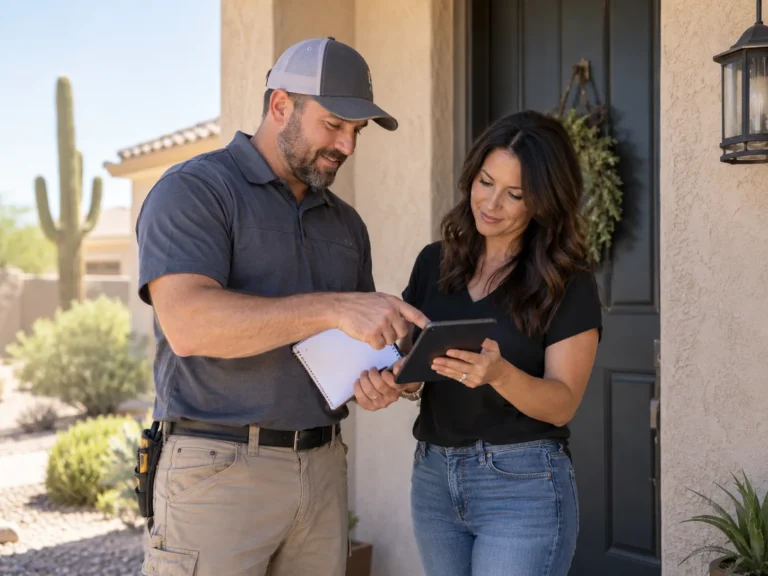
The contractor should evaluate and measure the opening before ordering the final product.
An in-person assessment can identify conditions that are difficult to determine from photographs alone, including opening dimensions, frame condition, trim requirements, and whether the opening is square.
2. Product Selection and Written Proposal
After evaluating the opening, the contractor should explain the available products and provide a written proposal.
The proposal should identify the product you selected, along with relevant options such as finish, glass, hardware, and installation scope.
You should understand what you’re ordering before committing to the project.
3. Ordering and Project Updates
Many exterior door systems are ordered based on the specific opening, configuration, finish, glass package, and hardware selected.
Timing can vary significantly by manufacturer and product.
Instead of relying on a universal lead time, ask the contractor what the current expected timing is for the specific door being proposed and how you will receive updates if that timing changes.
4. Installation
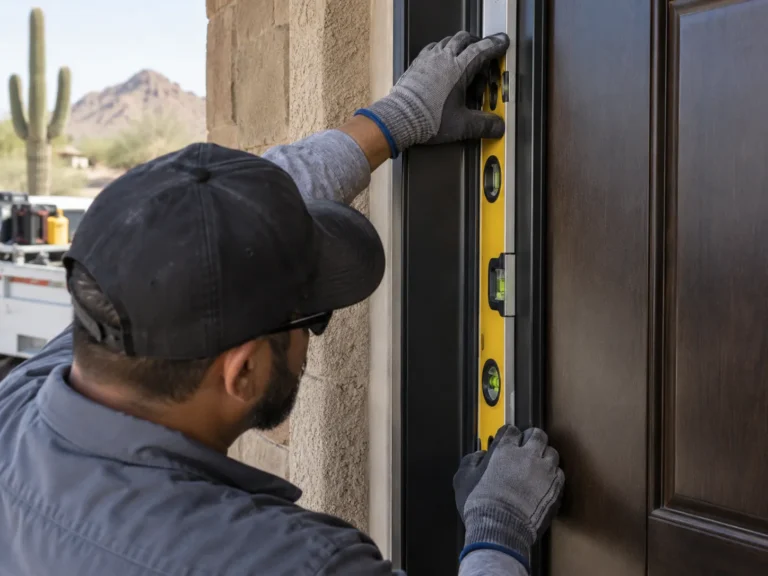
On installation day, the crew removes the existing door as required, evaluates the opening, prepares the installation area, installs and secures the new unit, and completes the required sealing, threshold, trim, weatherstripping, and hardware work.
Installation time depends on the condition of the existing opening and the project scope. Frame deterioration, structural changes, trim work, or other repairs can add time to what would otherwise be a straightforward replacement.
5. Walkthrough and Cleanup
Before leaving, the installer should confirm that the door opens, closes, locks, and seals correctly.
The homeowner should also understand how the hardware operates, what warranty applies, and who to contact if an issue appears after installation.
The work area should be cleaned and old materials removed according to the project agreement.
What About Permits?
Permit requirements are determined by the municipality and by the scope of the project.
A straightforward replacement using an existing opening may be exempt from permitting in some East Valley cities, while enlarging, relocating, or structurally modifying an opening can require a permit or plan review.
Do not assume that one permit rule applies throughout Maricopa County.
Ask the contractor to verify the requirements for your specific city and project before work begins.
What Questions Should I Ask Before I Sign Anything?
Use these questions during any front door consultation. A qualified contractor should be able to answer them clearly.
1. Are You Licensed With the Arizona Registrar of Contractors?
A good answer: Yes, and provide the license number so you can verify it independently.
2. What Door Material Do You Recommend for My Home, and Why?
A good answer: A recommendation based on your entry’s sun exposure, orientation, protection, appearance goals, and maintenance preferences.
3. Can I See a Detailed Written Proposal?
A good answer: Yes. The proposal clearly identifies the product and explains what the project includes.
4. Who Will Install the Door?
Some companies use employees, some use subcontractors, and some use a combination. Either arrangement can produce quality work. What matters is knowing who is responsible for installation quality, supervision, and warranty service.
5. What Warranty Covers the Installation?
Manufacturer warranties generally apply to the product itself. Ask separately what warranty the installation company provides for labor or workmanship, and how it handles service requests after installation.
6. Who Handles the Permit if One Is Required?
A good answer: The contractor understands your municipality’s requirements and clearly explains who is responsible for obtaining any required permit. Be cautious if responsibility for a required permit is unclear.
7. What Is the Current Expected Timing for This Specific Door?
A good answer: A realistic estimate based on the manufacturer and product being proposed, along with an explanation of how order and scheduling updates will be communicated. A generic timeline that supposedly applies to every product is less useful than a contractor who explains the variables affecting your specific order.
What About Energy Efficiency and Door Incentives?
Energy efficiency can still be worth considering when replacing an older exterior door, but homeowners should be careful with outdated information about federal tax credits.
The federal Section 25C Energy Efficient Home Improvement Credit previously included qualifying exterior doors. However, the credit is not available for property placed in service after December 31, 2025. That means a qualifying exterior door installed in 2026 does not receive the previous Section 25C door credit.
If you see older articles stating that homeowners can claim 30 percent of a qualifying exterior door up to $250 per door, those rules applied before the credit ended.
For a door being purchased today, focus instead on the product’s actual energy performance.
ENERGY STAR evaluates residential doors using U Factor and, where applicable, Solar Heat Gain Coefficient based on the amount of glazing and applicable climate requirements.
When energy performance matters, ask the contractor about:
- The door’s U Factor
- Solar Heat Gain Coefficient when the door contains glass
- Glass and Low-E options
- Weatherstripping
- Threshold and perimeter sealing
- ENERGY STAR certification where applicable
- How the door’s orientation affects product selection
In a hot climate, controlling solar heat gain is especially important for doors with substantial glass.
State, utility, and local incentive programs can change, so verify any claimed rebate or incentive before choosing a product based on expected savings.
What Should I Watch Out For?
High-Pressure Sales Tactics
A front door replacement usually doesn’t require an immediate decision.
Be cautious if a company says a substantial discount disappears unless you sign during the initial appointment.
A professional contractor should give you enough information to understand the proposal and make a considered decision.
An Unusually Low Bid Without an Explanation
The lowest estimate is not automatically the wrong choice.
However, if one quote is dramatically below the others, compare the product, installation scope, hardware, warranty, permit responsibility, and repair allowances carefully.
A lower price may simply reflect a different product or scope, but you should understand the difference before signing.
A Vague Contract
A contract that only says “fiberglass entry door” leaves important details unresolved.
Ask for the exact manufacturer, product or series, finish, glass configuration, hardware, installation scope, and warranty information to be included in writing where applicable.
The more clearly the agreement describes what is being installed, the easier it is to avoid misunderstandings later.
Business Information You Cannot Verify
A contractor should have business information you can independently verify.
Check the Arizona contractor license, company name, contact information, warranty terms, and written proposal before committing to the project.
A lack of a traditional showroom by itself does not mean a contractor is unreliable. The key question is whether you can verify the company and its credentials and whether you can easily reach the contractor after the project is complete.
Three Signs You Are Dealing With a Reputable Door Installation Company
- They clearly explain what is included in the proposal.
- They give you reasonable time to make a decision without artificial urgency.
- They provide licensing and warranty information that you can verify.
Frequently Asked Questions
How Do I Verify a Door Installation Company's License in Arizona?
Use the Arizona Registrar of Contractors license search and enter the contractor’s company name or license number. Confirm that the license is current and that the classification covers the work being proposed. Arizona generally requires a contractor license when labor and materials exceed $1,000 or when a permit is required, regardless of project price.
What Is the Best Front Door Material for Arizona Heat?
Fiberglass is often a strong choice for Arizona homes because it resists warping, denting, and corrosion while requiring little maintenance. However, the best material depends on sun exposure, shade, finish, glass area, and installation quality. Steel offers strength and value, while wood can perform well when protected but usually requires more maintenance.
Do I Need a Permit to Replace a Front Door in Arizona?
It depends on the city and the scope of the work. A straightforward replacement using the existing opening may be exempt from permitting in some municipalities. Enlarging, relocating, or structurally changing the opening is more likely to require a permit or plan review. Ask your contractor to verify the requirements with the appropriate city before work begins.
How Much Does Front Door Installation Cost in Arizona's East Valley?
Front door installation costs vary significantly based on the door material, manufacturer, size, glass, hardware, finish, frame condition, trim work, structural changes, and installation requirements. Because those variables can change the project substantially, a generic price range may not accurately describe your home. An in-home assessment and itemized proposal provide a more useful comparison than a broad online estimate.
Is There Still a Federal Tax Credit for Exterior Doors in 2026?
No. The federal Section 25C Energy Efficient Home Improvement Credit is not available for property placed in service after December 31, 2025. The previous exterior door credit therefore does not apply to doors installed in 2026. Homeowners should verify any current state, utility, manufacturer, or local incentives before buying based on an expected rebate or credit.
How Long Does Front Door Installation Take?
The time required depends on the condition of the existing opening and the work involved. A straightforward replacement may take a workday, while frame repairs, trim changes, structural modifications, or more complex installations can take longer. Product lead times also vary by manufacturer, configuration, finish, glass, and hardware. Ask the installer for an expected schedule based on the specific door and opening rather than relying on a universal timeline.
Get an In-Home Consultation From Trusten
Trusten Windows & Doors provides residential door replacement and installation throughout Arizona’s East Valley communities.
Homeowners receive clear recommendations, an itemized proposal, professional installation, and a no-pressure buying experience. Trusten also keeps customers informed through ordering, scheduling, installation, and post-project follow-up.