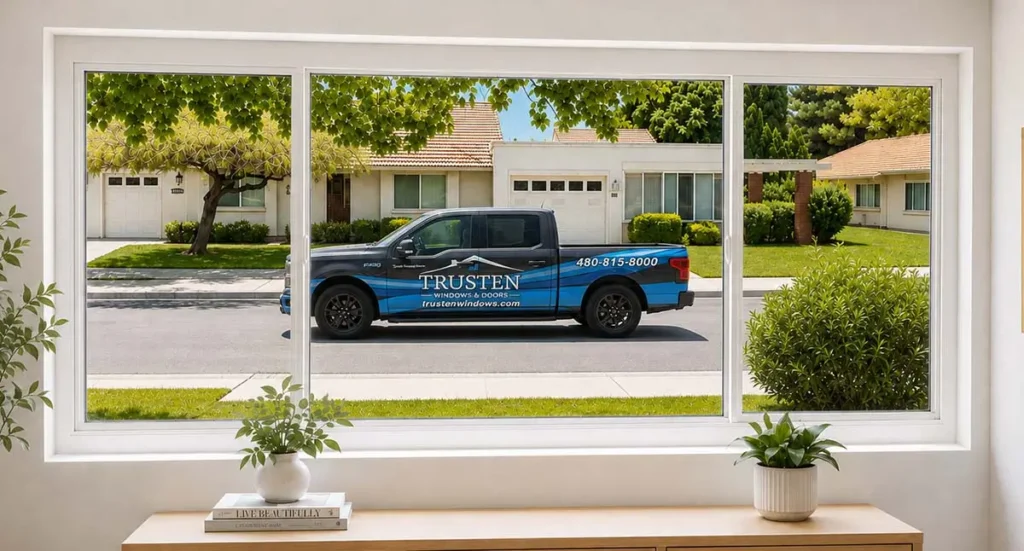
Low-E glass has a thin metallic coating applied to the glass surface that controls how much heat and light pass through the window. In Arizona, low-E glass is not optional. It is one of the most impactful glass features a homeowner can choose for comfort and energy efficiency.
But not all low-E coatings are the same, and choosing the wrong type for a hot climate can reduce its effectiveness. This guide explains what low-E glass is, how it works, why Arizona’s climate calls for a specific formulation, and what to look for when comparing window products. It also covers SHGC, the rating number that tells you whether a low-E window will actually perform well in East Valley heat.
What Is Low-E Glass, Exactly?
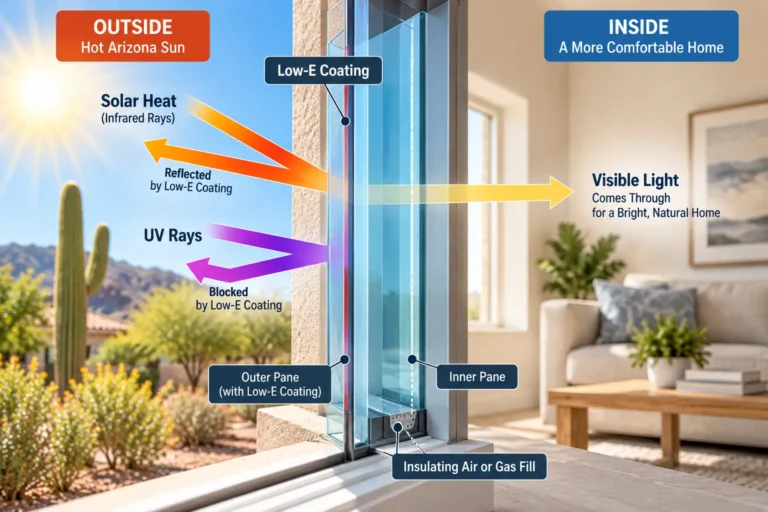
Low-E glass (short for low-emissivity glass) is standard glass with a microscopically thin metallic or oxide coating that reflects infrared and ultraviolet radiation while still allowing visible light to pass through.
Here is what that means in practical terms:
- The coating sits on one glass surface inside the sealed window unit. It is invisible to the eye and does not change how the glass looks from a distance.
- Low-E glass does two main jobs: it reflects heat, and it blocks the UV light that fades furniture and flooring over time.
- The coating does not make the glass darker or tinted. It works in the infrared spectrum, which the human eye cannot detect.
- Most quality replacement windows sold in the U.S. today include some form of low-E coating as standard.
The critical distinction for Arizona: low-E coatings are formulated differently depending on the climate they are built for. A “passive” low-E coating is designed for cold climates. It lets solar heat in during the winter and helps retain interior warmth. A “solar control” low-E coating is designed for hot climates. It blocks solar heat from entering the home in the first place.
Arizona homes need solar control low-E, not passive low-E. The problem is that these two formulations can look identical on a spec sheet unless you check the performance number behind them: SHGC.
What Is SHGC, and Why Does It Matter More Than the Low-E Label?
SHGC (Solar Heat Gain Coefficient) tells you how much solar heat passes through a window. In Arizona, this number matters more than the low-E label by itself.
A few things to know about SHGC:
- SHGC is measured on a scale from 0 to 1. A lower number means less heat enters through the glass.
- ENERGY STAR recommends an SHGC of 0.23 or lower for homes in the Southern climate zone, which includes all of Arizona.
- A window labeled “low-E” can have an SHGC of 0.23, or it can have an SHGC of 0.40. Both technically have a low-E coating, but one is far better suited to Arizona’s climate than the other.
- You can find the SHGC on the NFRC (National Fenestration Rating Council) label attached to every rated window. This label also lists U-factor and visible light transmittance. Ask to see it before purchasing any window.
The two numbers that matter most for Arizona windows are SHGC (target 0.23 or lower) and U-factor (lower is better). Low-E is the technology that gets you there, but the SHGC number is the result that actually counts.
A simple way to use this during a consultation is to ask the installer directly: “What is the SHGC on this product?” If they cannot answer that question, or do not seem to know, that is a signal to ask more questions before committing to anything.
Is Low-E Glass Worth the Extra Cost in Arizona?
Yes. For Arizona homes, low-E glass with a low SHGC is worth the cost. The energy savings, comfort improvement, and UV protection deliver real, measurable value in the East Valley’s climate.
Here is why:
- Energy savings. Arizona homes with south- and west-facing windows see the highest solar heat gain. A window with an SHGC of 0.23 lets in meaningfully less heat than one with an SHGC of 0.40, reducing the load on the air conditioning system.
- Comfort improvement. Radiant heat coming off glass near a reading chair, a workspace, or outdoor-facing furniture is one of the most common comfort complaints in Arizona homes. Low-SHGC glass reduces the surface temperature of the glass itself and the radiant heat zone around it.
- UV protection. Low-E coatings block 90 to 99 percent of UV radiation, which slows the fading of hardwood floors, furniture fabrics, and artwork. This is a meaningful secondary benefit given Arizona’s intense sun exposure.
- Cost. Low-E glass typically adds $30 to $80 per window compared to clear glass. That is a small addition to the overall cost of a window, and it tends to pay for itself quickly in a climate where air conditioning runs six to eight months out of the year.
At the glass-package level, two questions tell you nearly everything you need to know: “Is this solar control low-E or passive low-E?” and “What is the SHGC on this product?”
How to Compare Low-E Windows When Shopping in Arizona
Window brands market their low-E coatings under different product names, which can make comparison shopping confusing. A few practical tips:
- Look at the NFRC label, not the marketing name. Names like “SunShield,” “SolarZone,” or a manufacturer’s branded glass package all describe low-E products, but what actually matters is the SHGC number printed on the NFRC label.
- Ask about the specific glass package. Window manufacturers and glass suppliers across the industry widely use solar-control glass products designed for hot climates. Ask your installer which glass package they specify and why it fits Arizona.
- Consider double-pane versus triple-pane carefully. Triple-pane windows are built primarily for cold climates, where retaining interior heat is the priority. In Arizona, a well-specified double-pane window with solar-control low-E and argon gas fill will typically outperform a triple-pane window with mediocre glass ratings. Triple-pane is generally unnecessary in Arizona unless a home is at a higher elevation with cold winters.
- Remember that frame material and glass performance are separate issues. The frame material (vinyl, fiberglass, aluminum) affects the window’s overall U-factor, but it does not change the SHGC of the glass itself. Both numbers matter, so check both.
Frequently Asked Questions
Is low-E glass worth it in Arizona?
Yes. Low-E glass with a solar-control formulation and an SHGC of 0.23 or lower is one of the most impactful upgrades an Arizona homeowner can make when replacing windows. The energy savings, comfort improvement, and UV protection suit the East Valley’s long, intense summers and strong year-round sun exposure.
What SHGC should Arizona windows have?
ENERGY STAR recommends an SHGC of 0.23 or lower for windows in Arizona’s Southern climate zone. The lower the SHGC, the less solar heat enters through the glass. This number is printed on the NFRC label on every rated window, so ask to see it before purchasing.
What is the difference between solar control and passive low-E glass?
Passive low-E glass is designed for cold climates. It allows some solar heat in to help warm the home during winter, while retaining interior heat. Solar control low-E glass is designed for hot climates and blocks solar heat from entering. Arizona homes should always use solar control low-E, not passive low-E. The two can look identical unless you check the SHGC number on the NFRC label.
How much does low-E glass cost?
Low-E glass typically adds $30 to $80 per window compared to standard clear glass. This is a relatively small addition to a window’s total cost and often pays for itself over time through lower cooling costs, especially in a climate where air conditioning runs most of the year.
What are the downsides of low-E glass?
Low-E glass has few downsides for Arizona homes when you choose the right formulation. The main pitfall isn’t low-E itself, but choosing the wrong type: a passive low-E coating built for cold climates will not perform as well in Arizona heat as a solar-control formulation. Some high-performance solar-control coatings can also have a very slight tint visible in direct sunlight, though this is minor compared to decorative window film or tinted glass.
Can you put low-E coating on existing windows?
Factory-applied low-E coatings are built into the glass during manufacturing as part of a sealed window unit, unlike aftermarket film applied to existing glass. Retrofit window films can reduce some solar heat gain, but they don’t replicate the performance of a true low-E-coated, sealed window unit. For homeowners comparing options, a consultation can clarify which approach fits a specific home and budget.
Does low-E glass reduce UV in my home?
Yes. Low-E coatings block 90-99% of UV radiation. This significantly slows the fading of hardwood floors, furniture fabrics, rugs, and artwork, a meaningful benefit in Arizona’s intense UV environment.
Does low-E glass make windows look different or tinted?
No. Low-E coatings are microscopically thin and work in the infrared spectrum, which the human eye can’t see. Standard low-E glass looks identical to clear glass from inside or outside the home. Some specialty solar-control coatings have a very light tint visible in direct sunlight, but this is distinct from window film or decorative tinted glass.
Want a Low-E Recommendation for Your Specific Home?
Trusten walks through SHGC and low-E options during every window replacement consultation, and recommendations are based on your home’s specific window orientations, not a one-size-fits-all glass package. Every estimate is transparent and itemized, with no high-pressure sales tactics.
Trusten Windows & Doors proudly serves Mesa, Gilbert, Tempe, Chandler, Queen Creek, and Scottsdale. Licensed, Arizona ROC #363840.