
The best front door for Arizona heat is usually an insulated fiberglass door with tight weatherstripping and, if it has glass, Low-E coated glass. Fiberglass resists warping and fading in strong sun, insulates well, and can be finished to look like painted or stained wood. Steel is a secure, lower-cost option, and wood works best on shaded or covered entries.
Mesa summers are long and hot. National Weather Service records for Phoenix show an average of 94 days per year at or above 100°F. A front door facing the afternoon sun absorbs heat for hours, and over the years it shows up in the door’s finish, seals, and hardware.
This guide covers the front door styles that suit Mesa homes, how fiberglass, steel, and wood compare, what helps a door hold up in full sun, and what to expect from front door replacement from the first estimate to the final walk-through.
When Is It Time for a New Front Door?
It is time for a new front door when your current door no longer seals, latches, or withstands the sun, or when you want a real upgrade in security or curb appeal. Common signs include:
- Light or drafts around the edges. If you can see daylight around the door or feel hot air coming in, the door or its weatherstripping is no longer sealing.
- A door that sticks, sags, or will not latch smoothly. These problems can point to a warped door or a misaligned frame.
- Sun damage. Fading, peeling, cracking, or warping can signal that the door’s surface is breaking down.
- A door that feels hot to the touch. On summer afternoons, a poorly insulated door can let a lot of heat into your entry.
- Old or worn hardware. If you no longer trust your lock, it may be time to upgrade to a door with a modern locking system.
- You want a new look. A front door is one of the most visible parts of your home, and a new one can change how the whole entry feels.
Front Door Styles That Fit Mesa Homes
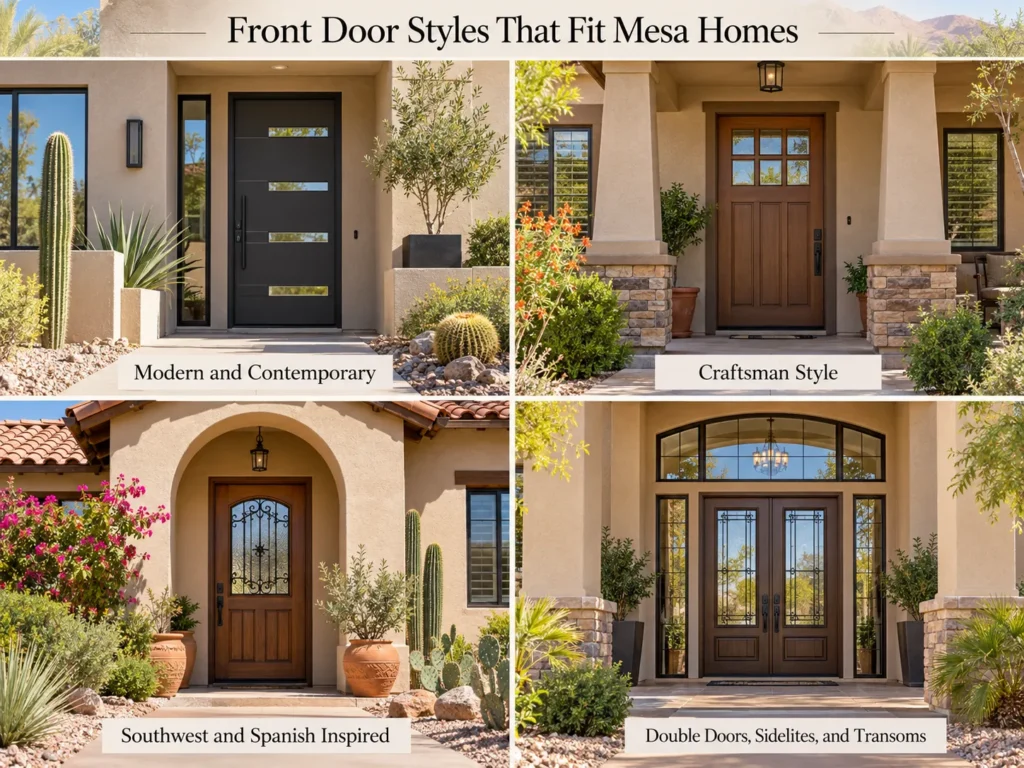
The right front door style matches your home’s architecture and works with how much sun your entry gets. Here are the styles Mesa homeowners compare most often.
Modern and Contemporary Doors
Modern doors use clean lines, flat or minimal panels, and often narrow strips of glass. They suit updated and newer homes. Many homeowners choose dark colors for this style, so it is worth thinking about sun exposure before you pick a finish (more on that below).
Craftsman-Style Doors
Craftsman doors usually have a row of small glass panes in the upper half and simple panels below. They pair well with ranch-style and traditional homes.
Southwest and Spanish-Inspired Doors
Arched tops, warm wood-look finishes, and decorative glass give these doors a look that complements stucco walls and tile roofs, a common combination in Arizona homes. A fiberglass door with a wood-grain finish can deliver this look with less upkeep than real wood.
Double Doors, Sidelites, and Transoms
Double doors create a wider, grander entry. Sidelites (narrow glass panels beside the door) and transoms (glass panels above it) bring natural light into the entry. Keep in mind that adding sidelites or making the opening wider changes the scope of the project and may require a permit.
Glass Options
Front doors come with full glass, half glass, or no glass at all. Textured or decorative glass lets light in while keeping your entry private. On a sun-facing entry, ask for Low-E glass, which reduces the amount of solar heat that passes through.
A note for HOA communities: If your home is part of a homeowners association, check its architectural guidelines before you choose a color or style. Some HOAs require approval for exterior changes.
What Is the Best Front Door Material for Arizona Heat?
Fiberglass is the best all-around front door material for Arizona heat. It does not warp or corrode, resists UV fading, insulates better than steel, and can be painted or stained to look like wood. Here is how the three main materials compare.
Material | Heat and Sun Performance | Insulation | Upkeep | Security | Best Fit |
Fiberglass | Resists warping and UV fading | Foam core; most rate R-5 to R-6 without glass | Low | Strong, especially with a multi-point lock | Most Mesa homes, including sunny entries |
Steel | Transfers heat faster in direct sun | Foam core; most rate R-5 to R-6 without glass | Moderate; needs paint upkeep | Highest | Security-focused homeowners on a tighter budget |
Wood | Can dry out, crack, or warp in direct sun | Lower than insulated steel or fiberglass | High; needs regular refinishing | Strong when solidly built | Shaded or covered entries where the natural look matters most |
R-value ranges are from the U.S. Department of Energy and exclude any glass in the door.
Fiberglass Front Doors
Fiberglass performs best for most Mesa homes. It withstands heat and UV exposure, doesn’t rust, and holds paint longer than wood in desert conditions. It is also the most flexible choice for style, since it can be smooth for a modern look or textured to mimic wood grain.
Steel Front Doors
Steel doors are the most secure option and usually cost less upfront than fiberglass. The trade-off in Arizona is heat. Steel transfers heat faster, so a steel door in direct sun should have a foam-filled core and good weatherstripping. Trusten considers the door’s direction and sun exposure when recommending a core.
Wood Front Doors
Wood has a classic look, but it needs the most care in a desert climate. According to the U.S. Department of Energy, insulated steel and fiberglass doors are more energy-efficient than wood doors. Wood suits entries protected by a deep porch or covered patio.
What Helps a Front Door Perform Well in the Sun?
A front door performs well in the sun when it has a tight seal, an insulated core, the right glass, and a finish suited to its exposure. The material is only part of the picture.
- Weatherstripping and threshold. A door is only as efficient as its seal. Gaps let hot air and dust inside. The Department of Energy recommends checking exterior door weatherstripping once a year to see if it needs replacing.
- Insulated core. Foam-filled cores help steel and fiberglass doors slow heat transfer. This matters most for doors that face the afternoon sun.
- Low-E glass. Low-E coatings reduce solar heat coming through glass panels and sidelites. For glass that gets strong sun, Trusten recommends a Solar Heat Gain Coefficient (SHGC) of 0.25 or lower. Learn more in our guide to Low-E glass
- Finish color. Darker colors absorb more heat than lighter ones. If you love a dark door on a sunny entry, ask about finish options and the manufacturer’s guidance for doors in direct sun.
- Ratings you can compare. ENERGY STAR sets door requirements based on a door’s glass content, using ratings certified by the National Fenestration Rating Council (NFRC). The NFRC label helps you compare models side by side.
- Proper installation. Even a high-quality door will drag, leak air, or wear out early if it is not installed plumb, level, and fully sealed.
A caution about storm doors: A glass storm door over a sun-facing front door can trap heat between the two doors. Door manufacturer ProVia notes this trapped heat can warp the trim around the entry door’s glass, or even the door itself. If you’re considering adding a storm door, read your entry door’s warranty and the manufacturer’s instructions first.
Custom Front Doors for Non-Standard Openings
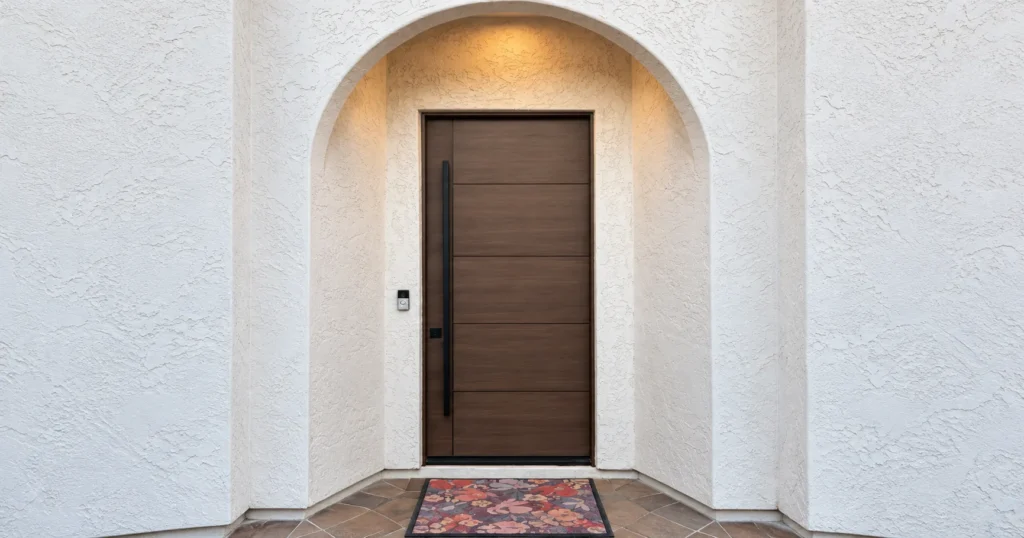
Yes, you can get a front door that fits a non-standard opening. Some older homes have openings that do not match today’s standard door sizes. Trusten measures the existing opening and sources doors made to fit, or coordinates frame changes for a true custom fit.
Custom options can include the door size, glass style, finish, hardware, and added sidelites or a transom. Accurate measuring and fitting matter here. A door that does not fit its opening correctly can stick, leave gaps, and let in heat and dust.
Do You Need a Permit to Replace a Front Door in Mesa?
In most cases, replacing a front door in the same-size opening doesn’t require a permit. Making the opening larger, adding a door where none existed, or changing the structure around the door usually does.
The City of Mesa’s residential construction FAQ also notes that historic homes need Planning approval for some exterior projects. If your home is historic, check with the city before you make changes.
When a project needs a permit, Trusten handles the application and coordinates inspections, so you don’t have to manage the city’s requirements yourself.
What Affects the Cost of a New Front Door?
The cost of a new front door depends on the door and the work needed to open it. The main factors are:
- Material: fiberglass, steel, or wood
- Size and configuration: a single door, double doors, sidelites, or a transom
- Glass: how much glass, the glass type, and decorative options
- Hardware: handle sets, deadbolts, and multi-point locking systems
- Finish: paint, stain, or factory finish
- The opening: whether the frame needs repair or the opening needs to change size
Trusten provides an itemized written proposal, so you can see exactly what you are paying for. There is no bundled “cash discount” pricing and no pressure to sign the same day. For a quick starting point, try the instant estimate tool, and ask about financing options for your project.
What to Expect When You Replace Your Front Door
Most standard front door replacements take four to six hours, from removing the old door to the final walk-through. Here is how the process works with Trusten:
- Free in-home estimate. Trusten reviews your existing door and frame, discusses your goals and budget, and takes precise measurements. This is not a high-pressure sales visit.
- Product selection. Trusten recommends specific doors based on your opening size, the direction your entry faces, your budget, and your performance goals. You can see samples in person, and you get a realistic lead time before you commit.
- Permit coordination, if needed. Trusten handles permits and inspections for projects that require them.
- A heads-up for your neighbors. Trusten reaches out to neighbors before installation day.
- Professional installation. Trusten’s installers are employees, not subcontractors. The work includes removing and disposing of your old door, preparing the frame, hanging the new door, and installing weatherstripping and hardware. Custom sizes or permitted openings may take a full day or a second visit.
- Quality walk-through. A Trusten team member tests the latch, checks the seal, shows you how any multi-point lock works, and answers your questions.
- Follow-up and warranty. Trusten follows up 30 days after installation. The installation work is backed by a labor warranty, and the door itself is covered by the manufacturer’s warranty. Trusten explains both before installation.
Tips for installation day: Clear the area around the entry, plan for pets, and expect the doorway to be open for part of the day.
How to Choose a Front Door Installer in Mesa
The right installer matters as much as the right door. Before you hire anyone, check these four things:
- An active Arizona ROC license. You can look up any contractor on the Arizona Registrar of Contractors website. Trusten is licensed under ROC #363840.
- Who does the work. Ask whether installers are employees or subcontractors.
- How the price is presented. Ask for an itemized proposal instead of one bundled number.
- What the warranty covers. Ask what the labor warranty includes and how the manufacturer’s warranty works.
For a deeper look, read our guide on choosing a front door installation company
Frequently Asked Questions
What Type of Front Doors Can Withstand Heat?
Insulated fiberglass doors handle heat best. They don’t warp or corrode, resist UV fading, and use a foam core that slows heat transfer. Insulated steel doors also perform well when they have a foam-filled core and good weatherstripping. Wood doors are more likely to dry out, crack, or warp in direct sun.
What Type of Front Door Is Best for Full Sun?
For a front door in full sun, choose fiberglass with a foam core, tight weatherstripping, and Low-E glass if the door has glass. For strongly sun-exposed glass, Trusten recommends a Solar Heat Gain Coefficient of 0.25 or lower. Lighter finish colors also absorb less heat than dark ones.
What Type of Front Door Material Is Best?
Fiberglass is the best all-around front door material for most homes in hot climates like Mesa. It combines durability, low maintenance, good insulation, and a wood-grain look. Steel is the best choice if security and upfront cost are your top priorities, and wood is best for covered or shaded entries.
What Is the Strongest Type of Front Door?
Steel is generally the strongest and most secure front door material. A door’s real-world security also depends on its frame, lock, and installation. A multi-point locking system, which secures the door at several points along the frame, adds strength to both steel and fiberglass doors.
How Do You Protect a Front Door From Direct Sunlight?
Choose a door built for sun exposure, such as fiberglass with a UV-resistant finish. Shade from a porch or covered entry helps, and lighter colors absorb less heat. Be careful with glass storm doors on sunny entries, because they can trap heat against the front door and may affect its warranty.
How Do You Heat Proof a Front Door?
Start with the seal. Replace worn weatherstripping and make sure the threshold and door sweep close tightly, since gaps let hot air in. The Department of Energy recommends checking weatherstripping annually. If the door is old, uninsulated, or warped, replacing it with an insulated fiberglass or steel door is a longer-term fix.
Ready for a New Front Door in Mesa?
The right front door adds curb appeal, comfort, and security, and the right material, seal, and installation help it withstand Mesa’s sun for years. Trusten offers front door replacement in Mesa and across the East Valley, including Gilbert, Tempe, Chandler, Queen Creek, and Scottsdale.
Trusten is licensed under ROC #363840, provides itemized proposals, and uses its own employee installers. There is never a high-pressure close.
Schedule Your Free In-Home Consultation or call 480-815-8000.